
The heads of Google and Microsoft are betting on AI agents but see power and chips as the biggest bottleneck. On top of that come figures on layoffs attributed to AI and the most important AI news from Europe, China and Japan.
Three terms first: An AI agent is a program that does not just answer but completes several steps on its own, such as filling in a form or sorting emails. Open source or open weights means the AI model is released freely, so anyone can download it and run it on their own computers. A GPU is a special processor (originally for graphics) on which almost all AI runs today.
1. Google CEO Sundar Pichai: agents, open source, the race, chips
Matthew Berman (Forward Future) interviewed Sundar Pichai on stage on May 20, 2026 (video, about 30 minutes). The key statements:
- Agents are becoming part of everyday web use. They are meant to take over tedious tasks such as forms or dealing with authorities. User control and trust are said to be decisive.
- A cautious start. Google’s agent “Gemini Spark” deliberately starts only with Google’s own services such as Gmail and Calendar. Third-party services are to be connected later via MCP, a kind of universal plug through which an AI communicates with other programs. Later the agent is also to be allowed to operate computers and browsers itself.
- Cybersecurity. Internally, Google has agents search for security vulnerabilities; they propose fixes (“patches”), test and install them. Whether a particularly powerful “hacker model” is released publicly is decided case by case, and for big leaps in coordination with authorities.
- Open source. With Gemma, Google releases smaller open models; a huge open frontier model is not planned because of the cost. On Chinese open models, he says in essence that he is more concerned about whether the US is doing enough to stay ahead.
- “Flash” models as workhorses. Because companies are blowing through their AI budgets, Google relies on fast, inexpensive models (Flash) for everyday work and expensive “Pro” models only for difficult tasks.
- No race at any cost. If AI can improve itself (recursive self-improvement), that becomes a question for society as a whole. This is linked to AGI, an AI that is as good as a human at almost all thinking tasks.
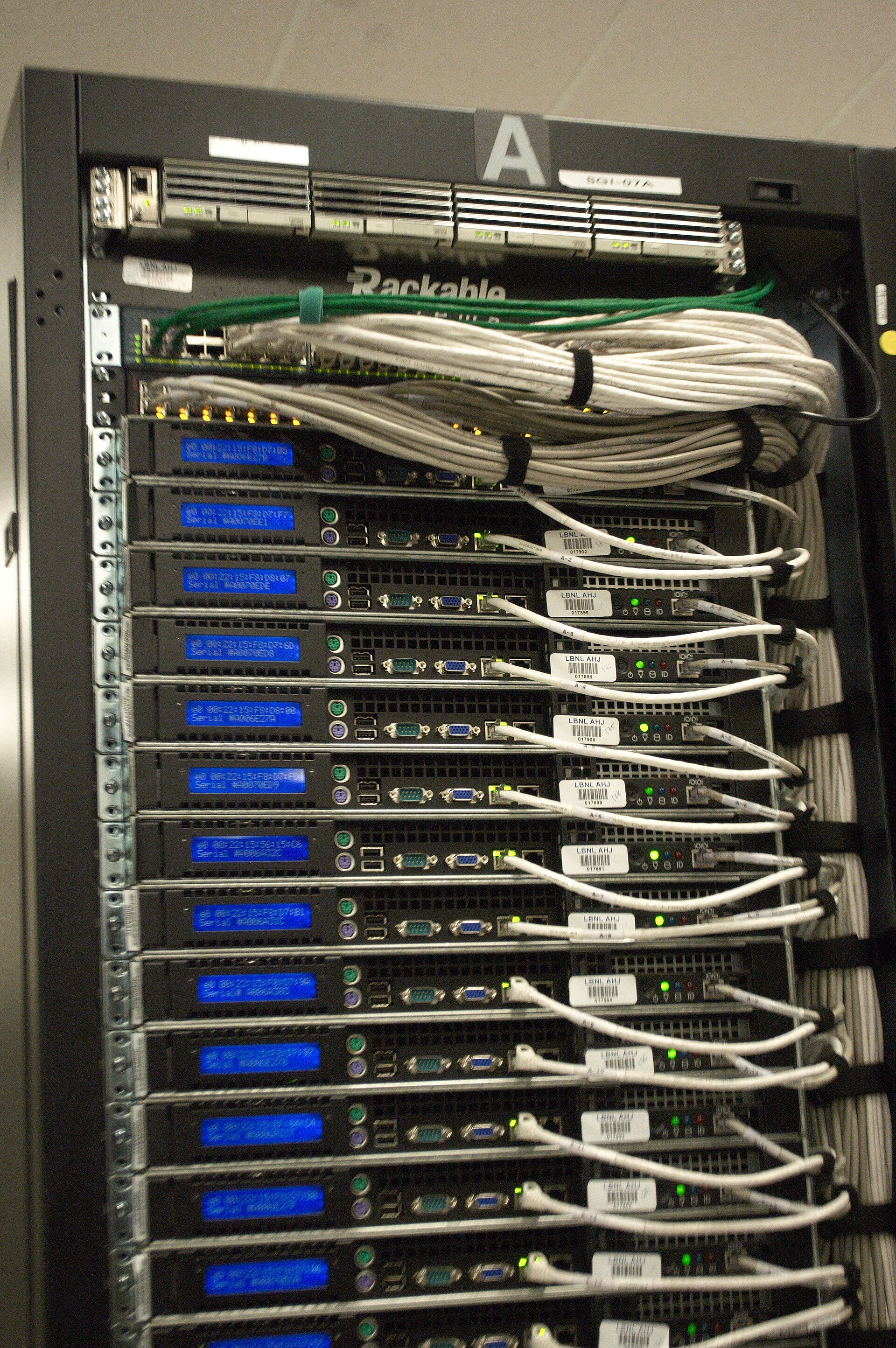
- Computing power is scarce. There is a shortage of power, memory chips, components and permits for new data centers; costs are rising.
Why it matters: Google is introducing agents step by step and prioritizes safety over speed. Power and chips are currently the industry’s biggest bottleneck.
Original article: https://www.youtube.com/watch?v=IB7IW6zX-H0
2. Microsoft executive Jay Parikh: agent factory, data centers, security
Jay Parikh leads Microsoft’s CoreAI division (tools companies use to build AI applications) and reports directly to CEO Satya Nadella. The interview was published on November 28, 2025. Key points:
- “Agent factory” Foundry. The platform is meant to help companies build their own agents with built-in security, able to run anywhere from the cloud (rented data centers) to the edge (devices on site).
- Back to the office. His team works fully on site again, because with AI tools changing so quickly people learn from each other faster in the office.
- Roles are blurring. Product managers and designers fix small bugs themselves with Copilot; advanced teams manage groups of agents, and supervisor agents check their work.
- Bottlenecks. There is a shortage of power, space, transformers and supply chains. Agents strain not only GPUs but also regular servers, storage and networks.
- Many models instead of one. Foundry offers more than 11,000 models. A model router (an automatic switch) picks the right model based on cost, speed and quality.
- OpenAI and in-house models. Microsoft builds OpenAI technology deep into its products and at the same time develops its own models in Mustafa Suleyman’s team.
- Security. Each agent gets its own digital identity with rules so it can be tracked and shut down if necessary.
In essence, Parikh says the question “How much code does AI write?” is pointless; what matters is what is possible now that wasn’t before.
Original article: https://www.youtube.com/watch?v=Q1tgc3WTb2k
3. AI Layoff Tracker: how many jobs are being cut with AI as the reason?
Forward Future keeps a list of layoffs where AI is named or suspected as a reason (page as of July 26, 2026). The numbers depend heavily on who is counting:
- 373,764 verified, reported job cuts since January 2023 (DisplaceIndex)
- more than 165,000 people affected in 2026 alone (Programs.com)
- up to 1.71 million in a much broader estimate (AI Layoff Watch)
Three big examples: Oracle had about 21,000 fewer employees in May 2026 than a year earlier (about 13%); in its annual report Oracle names AI as one reason alongside restructuring, performance issues and acquisitions, and the figure also includes normal attrition. Cloudflare has been cutting more than 1,100 jobs (about 20%) since May 2026 and wants to reposition itself as an “agentic AI-first” company. Block cut more than 4,000 jobs in February 2026, almost half its workforce. In 2026 the cuts mainly hit software and technology companies.
Context: The tracker itself stresses that AI need not be the only reason. Austerity programs, restructuring or overhiring in previous years often play a role. The range from 0.37 to 1.71 million shows how uncertain the numbers are.
Original articles:
- https://forwardfuture.com/m/ai-layoff-tracker
- https://www.reuters.com/business/world-at-work/oracle-workforce-shrinks-by-about-13-2026-06-22/
- https://www.reuters.com/business/world-at-work/cloudflare-cut-over-1100-jobs-2026-05-07/
- https://blog.cloudflare.com/building-for-the-future/
4. Europe: new models, sovereign AI and a softened AI law
- Mistral Large 4 (October 6). Mistral is previewing its largest model with one trillion parameters (roughly: the “adjustment knobs” a model sets while learning). Only 49 billion of them are active at any one time, which saves computing power. According to Mistral’s own tests, it beats DeepSeek V4 Pro and Qwen 3.8 Max at coding. According to Reuters, the open weights are to follow on October 27.
- Aleph Alpha “Kolibri” (October 5). A German-English model for public administration and industry, trained in Europe and able to run on customers’ own servers. This is called sovereign AI: independent of US providers.
- DeepL for Sovereign Markets (October 6). A version of the translation service that runs entirely in the EU and under EU law, initially for the DACH region, France and EU institutions.
- EU AI Act softened. Through the amendment package “Digital Omnibus”, the strict rules for high-risk AI (for example in hiring, education or lending) will apply only from December 2, 2027 instead of August 2026. However, people must be able to tell that they are talking to an AI, and deepfakes (deceptively realistic fake images or videos) must be labeled.
Original articles:
- https://brusselssignal.eu/2026/10/french-ai-flagship-mistral-announces-new-model/
- https://aleph-alpha.com/en/news/kolibri-sovereign-ai-made-in-germany/
- https://www.deepl.com/en/blog/building-for-europes-sovereignty-needs
- https://vonalab.com/en/blog/eu-ai-act-digital-omnibus
5. China: billions for AI companies and homegrown chips
- DeepSeek raises at least $12 billion (October 6). According to Bloomberg, at a valuation of at least about $75 billion; the main backers are Tencent and CATL. An IPO is planned afterwards.
- Moonshot AI (Kimi) has closed its last private funding round at a valuation of about $50 billion and is preparing an IPO in Hong Kong.
- Huawei ahead of Nvidia? (September 30). Huawei executive Eric Xu claims Huawei’s Ascend chips have overtaken Nvidia in market share in China, but admits that data is hard to come by.
- Chinese models among developers. According to CNBC (September 26), Chinese models accounted for 57–67% of usage on OpenRouter (a platform where developers access many AI models in one place) in one week. US models still bring in more revenue.
Original articles:
- https://qz.com/deepseek-funding-round-tencent-catl-ipo-100626
- https://www.ainchina.com/blog/deepseek-moonshot-dual-ipo-race-china-ai-2026/
- https://www.theregister.com/systems/2026/09/30/huawei-boss-claims-homegrown-ai-chip-sales-top-nvidia-in-china/5300266
- https://www.brandon-ta.com/blog/chinese-ai-models-state-of-play-2026/
6. Japan: an action plan and its own AI strategy
- AI action plan (October 1). Prime Minister Sanae Takaichi has ordered a plan by the end of the year. Starting in April 2027, investment in 17 strategic sectors, including AI, is to be promoted for five years.
- Sovereignty strategy. According to The Diplomat, Japan wants to mobilize around 370 trillion yen (about $2.3 trillion) for AI and related technologies by 2040, for example through Sumitomo’s partnership with the Tokyo startup Sakana AI.
- Sakana AI in medicine (October 10). The “Namazu” model now powers Aillis’s Evidence Finder, a research tool that searches and summarizes medical papers for doctors.
- SoftBank in Malaysia (October 8). SoftBank, Grab and PETROS are jointly exploring building AI infrastructure (data centers and skilled workers) in Sarawak.
Original articles:
- https://www.japantimes.co.jp/news/2026/10/01/japan/politics/takaichi-ai-promote/
- https://thediplomat.com/2026/10/can-japan-counter-chinas-dominance-in-ai/
- https://ai4japan.com/en/news/sakana-ais-namazu-model-powers-aillis-evidence-finder-for-doctors/
- https://group.softbank/en/news/press/20261008
7. Reddit voices on China and Japan
These are opinions from the community, not verified news.
- Qwen 4: In the r/LocalLLaMA forum (people who run AI on their own computers), a rumor is circulating that Alibaba’s Qwen 4 will arrive at the end of October. The mood is hopeful but skeptical.
- Security: A report is being discussed that a single hacker may have attacked Korean banks using AI tools, including Chinese open models.
- AI “companions” for children: Many users approve of China’s ban.
- Japan: The planned use of surveillance technology from the US company Palantir is viewed critically. Many are skeptical of Sakana’s claim of a “self-improving AI” because no model was shown.
Original articles:
- https://www.reddit.com/r/LocalLLaMA/comments/1wz1pqn/qwen_4_apparently_coming_out_at_the_end_of_october/
- https://www.reddit.com/r/LocalLLaMA/comments/1x0n4pt/last_week_some_of_south_koreas_biggest_banks_were/
- https://www.reddit.com/r/GreenAndPleasant/comments/1wzqtzj/the_bbc_produced_hit_piece_on_china_because_it_banned_ai_boyfriends_for_children/
- https://www.reddit.com/r/japannews/comments/1wxudr3/japans_government_is_pushing_ahead_with_domestic/
- https://www.reddit.com/r/singularity/comments/1x3khul/recursive_selfimprovement_is_here_sakana_ai_demonstrates_a_working_rsi_loop/
Bonus: Meta unveils frontier model “Muse Wonder”
On October 12, 2026, Meta introduced the models Muse Wonder and Muse Wonder Full. According to Meta’s own tests, they are about as strong as the best models from OpenAI and Anthropic, especially at agent tasks, coding and memory (the AI remembers over a long time what it has been told). Through the developer interface, usage costs $4 per million input tokens (text snippets, roughly part of a word) and $20 per million output tokens. “Full” is available only by subscription. Independent tests are still pending.
Original article: https://techcrunch.com/2026/10/12/meta-releases-its-first-frontier-model-muse-wonder/
Sources
- YouTube – Interview with Sundar Pichai (Forward Future)
- YouTube – Interview with Jay Parikh (Microsoft CoreAI)
- Forward Future – AI Layoff Tracker (layoff figures)
- Reuters – Oracle job cuts
- Reuters – Cloudflare job cuts
- Cloudflare Blog – Message to employees
- Brussels Signal – Mistral Large 4
- Aleph Alpha – Kolibri
- DeepL – EU offering for sovereign markets
- vonalab – EU AI Act / Digital Omnibus, new deadlines
- Quartz – DeepSeek funding
- AI in China – Moonshot / IPO plans
- The Register – Huawei chips vs. Nvidia
- State of play: Chinese AI models 2026
- Japan Times – Japan’s AI action plan
- The Diplomat – Japan’s sovereignty strategy
- AI4Japan – Sakana AI / Namazu in medicine
- SoftBank – Malaysia agreement
- Reddit r/LocalLLaMA – Qwen 4 rumor
- Reddit r/LocalLLaMA – Attack on Korean banks
- Reddit r/GreenAndPleasant – Ban on AI companions for children
- Reddit r/japannews – Palantir in Japan
- Reddit r/singularity – Sakana self-improvement
- TechCrunch – Meta Muse Wonder (model launch / pricing)