
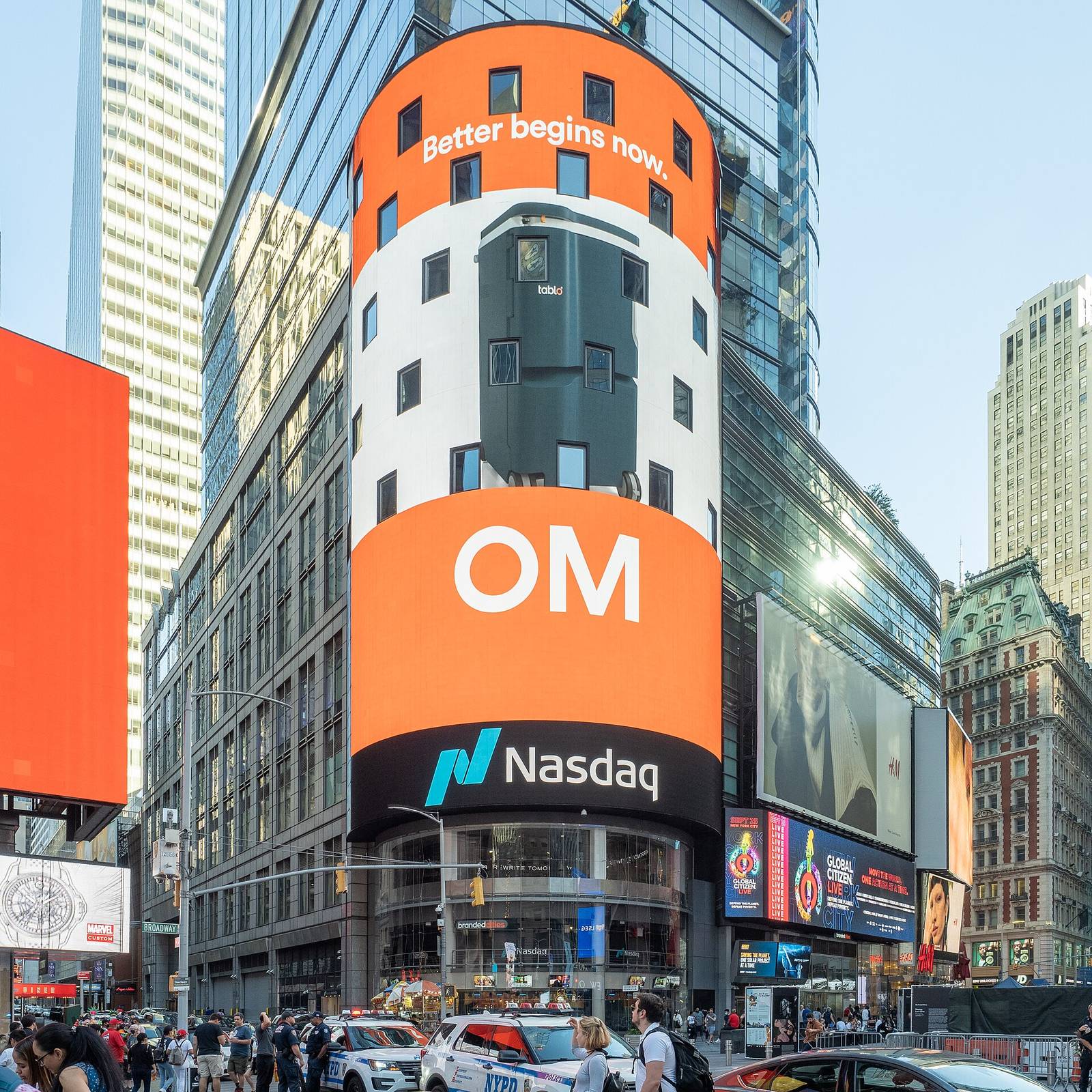
Anthropic, the AI company that makes the Claude models, is days away from becoming a listed company. According to its filings and to reporting by CNBC and Reuters, the shares are expected to be priced on Wednesday, 18 November 2026 and to start trading on the Nasdaq on Thursday, 19 November, under the ticker symbol ANT (CNBC).
If it goes ahead at the planned size, it could be the largest initial public offering (IPO) ever. This article is a status check as of the morning of 16 November 2026. Numbers from the prospectus are company figures; demand figures come from anonymous sources quoted by news agencies and can change; anything about the future is a forecast, not a fact.
The short version
- Dates (reported, based on filings and sources): pricing on 18 November, first trading day on 19 November, Nasdaq ticker ANT.
- Offer (fact, from the amended filing): 825 million shares at a price range of $70 to $78 per share. At the top of the range that is about $64.35 billion in gross proceeds (CNBC).
- Valuation (calculated by media): up to about $1.4 trillion on a fully diluted basis, according to CNBC and Bloomberg. Anthropic’s private funding round in May valued it at $965 billion.
- Private placement (fact, per filing as reported by CNBC): AMD, Broadcom, Google, Micron, Microsoft, Nvidia and TSMC agreed to buy $26 billion of a separate share class at the IPO price.
- Demand (reported, unconfirmed): about six times oversubscribed by Thursday, 12 November, according to Bloomberg and Reuters sources (Reuters via Investing.com).
- Business (company figures): revenue of $33.24 billion in the first nine months of 2026, and a reported net loss of $104 billion over the same period, mostly from accounting changes on convertible notes and derivatives.
- Main investor questions (reported): can Anthropic keep its lead as Google and others catch up, and can Claude grow beyond coding?
Key terms in plain English
IPO (initial public offering): the first time a private company sells shares to the public on a stock exchange. After that, anyone with a brokerage account can buy and sell the shares.
Prospectus / Form S-1: the official document a company files with the US Securities and Exchange Commission (SEC) before an IPO. It describes the business, the risks and the financial results. Anthropic has updated (amended) it several times; you can search the filings on the SEC’s EDGAR database.
Price range and pricing: before the IPO, the company and its banks give a range ($70 to $78 here). On pricing day they fix the final price, which can be inside, above or below that range.
Roadshow: a series of meetings in which the company and its banks present the offer to large investors such as fund managers.
Oversubscribed: investors have placed orders for more shares than are available. “Six times oversubscribed” means orders for roughly six times the number of shares on offer. It does not guarantee that the price will rise after listing.
Fully diluted valuation: the company’s value counting not only today’s shares but also shares that could be created from options, convertible notes and similar instruments. This is why different outlets report different valuations for the same price range.
Private placement: shares sold directly to selected investors, outside the public offer.
Lock-up: an agreement that stops existing shareholders from selling for a period after the IPO, often 90 to 180 days.
What the filings say about the offer
According to CNBC’s report on the amended filing of 10 November, Anthropic is offering 825 million shares at $70 to $78 each (CNBC). A summary of the filings by the trade site AI Tech Daily says that about 801 million of those shares are new shares sold by the company and about 24 million are sold by existing shareholders (AI Tech Daily). Reuters reports that Anthropic and some existing shareholders aim to raise up to about $64.4 billion (Reuters via Investing.com).
CNBC also reported, citing people familiar with the plans, that Anthropic is targeting a retail allocation of about 20%. That is much higher than the 5% to 10% that private investors usually get in a US IPO. The same summary of the filings says there are separate offering documents for retail investors in Europe, the UK, Japan, Australia and Canada, including a European prospectus approved by Germany’s financial regulator BaFin. Readers in Europe who are interested should check with their own bank or broker and read the official documents; this article is not investment advice.
The $26 billion side deal with chip and cloud companies
Next to the public offer, Anthropic said it agreed with AMD, Broadcom, Google, Micron, Microsoft, Nvidia and TSMC that they will buy $26 billion of its Class N common stock at the IPO price in a private placement. According to CNBC, these shares are not registered in the offering and not subject to the usual lock-up with the underwriters.
Why it matters: these companies sell Anthropic the chips, memory and cloud computing it needs to train and run Claude. Owning shares ties them more closely to Anthropic’s success. Critics of the AI industry have pointed to this kind of circular relationship before, for example around Nvidia’s financing web, where suppliers invest in their own customers.
How strong is demand?
The demand figures are not official. They come from people familiar with the order book, quoted by Bloomberg and Reuters:
- By the end of Tuesday, 10 November, the first roadshow day, orders were about two times the shares available, according to one Reuters source.
- By the end of Thursday, 12 November, the book was about six times oversubscribed (Reuters, 13 November).
- For comparison, Reuters reported that the SpaceX IPO earlier this year was about two times oversubscribed after its second roadshow day.
- Bloomberg reported that bankers told investors Anthropic would prioritise existing backers, so some new buyers may get fewer shares than they hoped.
Reuters notes that a single-digit subscription rate would be modest for a normal hot IPO, but bankers and investors called it impressive given the size. Anthropic declined to comment. The roadshow runs until Wednesday, 18 November, so these numbers can still change.
The business behind the IPO
According to the prospectus, as reported by CNBC:
- Revenue: $33.24 billion for the nine months ended 30 September 2026, up roughly 1,200% from the same period a year earlier.
- Run-rate revenue: about $81 billion at the end of October, up $10 billion from the previous month. “Run rate” means the current monthly revenue multiplied by twelve; it is a snapshot, not a full-year result.
- Net loss: $104 billion for the nine months, mostly from changes in the fair value of convertible notes and derivative liabilities. These are accounting effects, not cash spent, but they show how complex the capital structure has become. In the same period of 2025, the loss was $25.1 billion.
Anthropic, founded in 2021 by Dario Amodei and other former OpenAI researchers, mainly sells Claude to businesses. A week before the roadshow it released two new frontier models, Claude Fable 5.2 and Claude Mythos 5.2.
What investors are asking
Reuters spoke to several investors during the roadshow (Reuters, 13 November). Their main questions:
- How durable is the lead? Competitors such as Google are catching up fast in advanced AI models. Investors want to know whether Anthropic can keep premium prices if rivals offer similar quality.
- Can Claude win beyond coding? Claude is strong with software developers. The question is whether it can win the wider market of office and knowledge workers.
- How fast will revenue grow? Bank models reportedly assume about $270 to $280 billion in revenue in 2028. Some sell-side forecasts put 2026 at about $52 to $53 billion and 2027 at about $135 to $137 billion. One investor who decided not to take part works with a 2028 estimate about 30% lower. All of these are forecasts, not company guidance.
- Is the information enough? One investor told Reuters that some questions in a roadshow meeting did not get detailed answers, and that one group meeting had no dial-in for questions, which Reuters describes as unusual.
The wider market backdrop
The IPO comes at a nervous time for AI stocks. CNBC reported that some Anthropic investors had expected a higher valuation, with talk of $2 trillion earlier, and that even $1.5 trillion was considered a stretch by one investor. CNBC also points to rising interest rates, which make debt-financed data centres more expensive, and to the US midterm election results, which included state ballot measures that could slow the AI build-out.
The AI sector has also been shaken by the resignation of Nvidia’s CEO Jensen Huang on 11 November, which we covered in a separate post. Anthropic’s debut is therefore widely seen as a test of how much public investors still want to pay for AI growth.
What happens next
- Until 18 November: the roadshow continues; banks collect orders.
- 18 November (planned): final price is set. It could land inside, above or below $70 to $78, and the number of shares could change.
- 19 November (planned): first trading day on the Nasdaq as ANT, subject to regulatory clearance.
- After listing: the first quarterly results as a public company and the end of lock-up periods will be the next important moments to watch.
Facts versus predictions
| Statement | Status |
|---|---|
| 825 million shares at $70 to $78 | Fact, from the amended filing |
| $26 billion private placement with seven tech companies | Fact, from the filing as reported by CNBC |
| Nine-month revenue of $33.24 billion | Company figure |
| About six times oversubscribed | Reported by anonymous sources, may change |
| Pricing on 18 November, trading on 19 November | Planned, per filings and sources |
| 2028 revenue of $270 to $280 billion | Bank forecast |
Sources
- CNBC: Anthropic sets IPO price range of $70 to $78, looks to start trading Nov. 19 (10 November 2026)
- Reuters via Investing.com: Anthropic’s IPO is about six times oversubscribed, Bloomberg News reports (12 November 2026)
- Reuters via Investing.com: Investors flock to Anthropic IPO but question durability of AI lead (13 November 2026)
- AI Tech Daily: Anthropic’s filings keep its IPO range at $70 to $78 ahead of Nov. 18 pricing (summary of SEC filings)
- US SEC: EDGAR full-text search for Anthropic filings
This article is for information only and is not investment advice.